Like all Roman cities, Tolosa needed a clean running water supply.
Aqueducts
transported water from Ardennes to a reservoir. According to archeologists
and specialists, Tolosa's aqueducts appear to have been paved with marble, allowing
for smooth water passage. The reservoir was located at
the highest point in the city. In Tolosa's case this was in current day Place
Esquirol.
The water was then channeled down throughout the city.
On average two fountains
were present for every insulae. Water was also channeled to public bathhouses
where Romans washed and relaxed. The remains of a bathhouse were found in Place
des Carmes. This was believed to be a public facility. Villas had a more direct
supply of water and some had private bathing facilities.
Sewers systems found were built directly under the
cities' roads to transport waste out of the city. The main sewer found in
Tolosa was the Cloaca Maxima, which ran under the main street, the Cardo Maximo.
In these respects Tolosa very much fit the sanitation aspects of a typical
Roman
city.
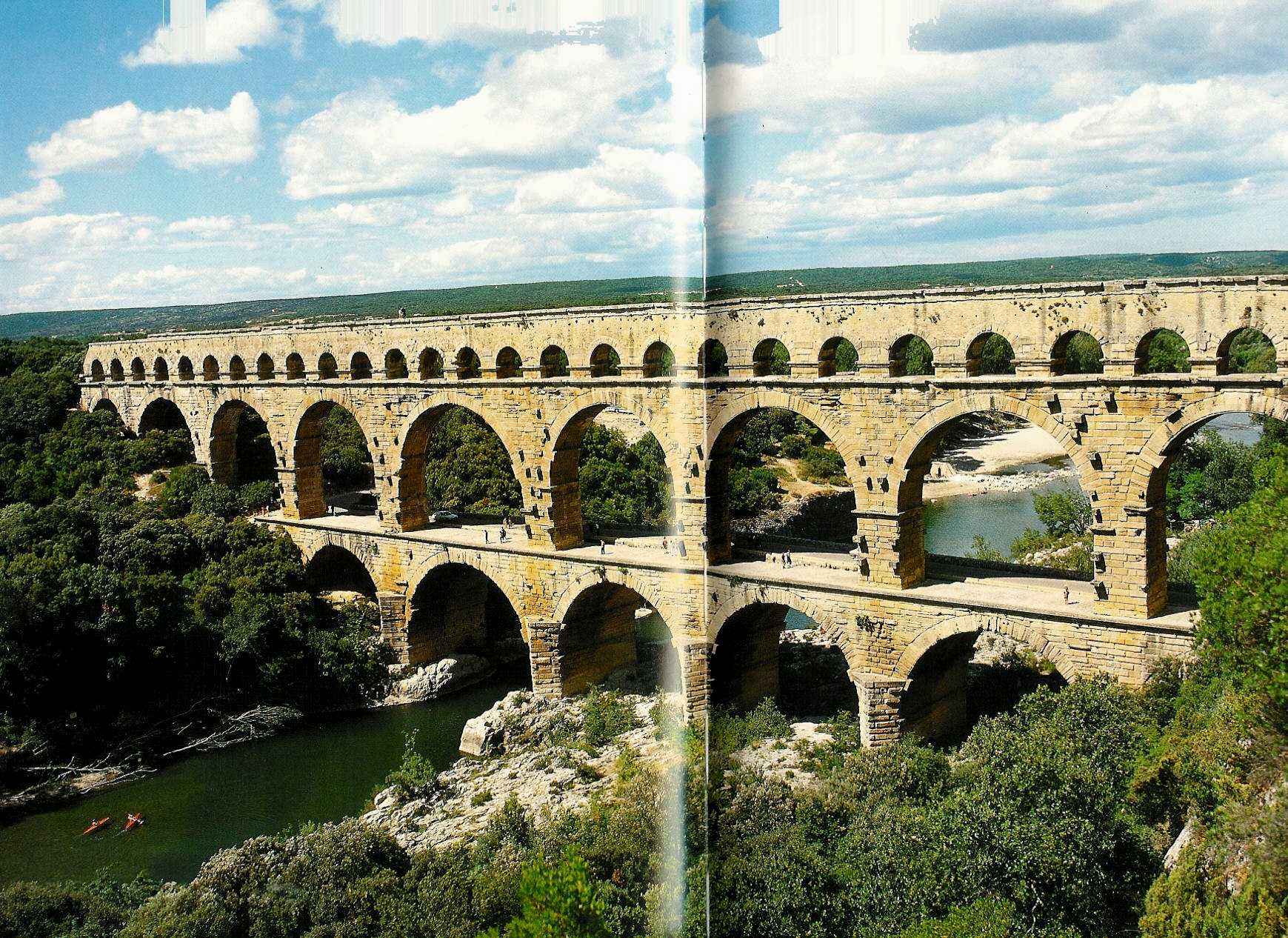
This is a picture of a Roman aqueduct. It is called the Pont du Gard and is found near Nimes, France.
Lassalle, Victor. Nimes – Pont du Gard. Florence, Italia: Casa Editrice Bonechi, 1989.