|
|
 |
|
| ||||||
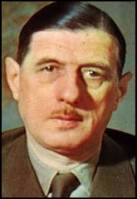
There were many important figures involved in the resistance. Here are a select few from the resistance movement in Toulouse and in other areas. In Toulouse there were many key figures. Information on every resistor mentioned is hard to find therefore only a few have been mentioned. There were important figures in Toulouse but there were also many like De Gaulle for example who urgere.d the resistance from else where. Key Figures Charles de Gaulle ‘Whatever
happens, the flame of the French resistance must not and shall not die.’ Extract
from De Gaulle’s radiobroadcast 18th June 1940 After the
outbreak of the Second World War, de Gaulle was given command of
various French offences during the war. He achieved various successes and
was the only commanding officer that was able to make the Germans retreat during
their invasion of France. In June 1940, Paul Reynaud, the French prime minister,
appointed him as minister of war. On 16th June Henri-Philippe Petain
had overthrown Reynaud in order to create a government who would comply with the
Nazis. De Gaulle, fearing for his life fled to England where on 18th
June 1940, he made a radio broadcast appealing to the French to continue their
resistance against German invasion. He played a key role in appealing to those
who wished to resist and helped kick start the resistance movement.
After the overthrowing of Reynaud, the U.S. president Franklin .D.
Roosevelt recognised the Vichy regime of Petain as being the French Government
whereas Great Britain’s Winston Churchill refused to do so, claiming that de
Gaulle was the leader of ‘liberated France’. As a result of de Gaulle’s
actions, a court martial in Toulouse sentenced him in absentia to four years in
prison. A second court martial sentenced him to death.
De
Gaulle also emphasized the importance of unifying the separate resistance
movements however these attempts were greatly dented after the arrests of two
key figureheads in French liberation movements-Jean Moulin and Charles
Delestraint in 1943. De Gaulle also created a provisional government on 26th
May 1944 that helped to create a sense of resistance in the liberated areas of
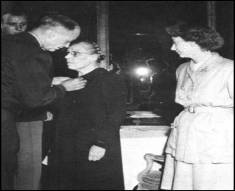
France. Marie Louise Dissard
When he met de Gaulle in London in 1943, de Gaulle put him in charge of unifying the resistance movements representing former soldiers. In February on his return from England, he became head of a movement that was in charge of returning French prisoners and deportees who were still in Germany, back to France. Jean
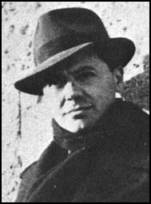
Moulin
On 1st of January 1942 Moulin parachuted his way back into
France and brought with him substantial sums of money in order to help set up
the underground press. His main aim after arriving back in France was to unite
various different resistance movements. After having persuaded around eight
different groups to unite, he formed the ‘Conseil National de la Resistance’
(the National Resistance Council). On 7th June 1943, an important
member of French Resistance was captured by the Gestapo and was tortured. The
Gestapo then obtained enough information to find Jean Moulin who died whilst
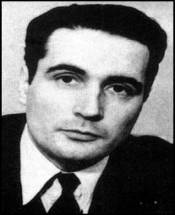
being tortured on the 8th July. Pierre
Villon
|
|
|
|